
Why Choose Us
Our Service
Free drawing design, Engineer drawing analysis and free quotation consultation, recommend suitable materials and processes according to the requirements of customer, 7*24 hours on line service. The sales staff will maintain active contact and cooperation after signing the contract, follow up the production progress of the product and the delivery date of the processing completion in real time, etc. When receiving the customer's change request, they will respond to the change as soon as possible, in order to solve the customer's change. We can provide technical support and actively cooperate in the process of debugging and installation, quality problem, we can help repair or re-production.
Our Certificate
Has passed ISO9001 quality certification, SGS certification,Utility model patent certificate. The company has ISO9001:2015, high-tech enterprises, specialized new enterprises and other titles, and in 2023 through Ali SGS certification, won the Ali Jinpicheng enterprise.
Advanced Equipment
Shenzhen Tuohai has Mazak five axis, CNC machining center, CNC lathe, turning and milling compound, milling machine, Japan Okamoto grinding machine and other kinds of production equipment more than 30 sets, three dimensional, two dimensional, height meter, hardness meter, marble inspection platform and other kinds of quality inspection equipment more than 10 sets.
Our Product
We mainly engaged in a variety of precision machinery parts processing,CNC processing,CNC lathe processing, etc., the company set manufacturing, specialized, sales, after-sales service as one, processing precision parts are widely used in machinery manufacturing, oil mining, aviation military, precision instruments, medical, communication electronics, new energy, etc. Optics and other industries.
What is Turn-milling Complex Machining
A CNC turn-mill is a machine tool that resembles a horizontal or vertical lathe, but can perform milling, drilling, tapping and other operations using one or more milling spindles. A turning center having a turret with live tooling spindles in some of its stations is a simple example of a turn-mill. More sophisticated turn-mills have powerful B-axis milling spindles that can be oriented at a range of angles to machine complex geometries. Turn-mills offer the advantage of machining parts complete instead of running parts on multiple machines, especially those that offer a subspindle to enable backworking operations. Like a conventional turning center, bar feeders are commonly used to automatically supply bar stock to a turn-mill’s workzone to enable unattended or lights-out machining.
-

CNC Turning and Milling Compound Machining Parts
Turning and milling composite machining can be referred to as turning and milling or turning and milling. Turning and milling is an advanced cutting and machining process that utilizes the rotary Add to Inquiry -
CNC Turn-milling Complex Machining
What is turning and milling composite, what are the advantages of turning and milling composite machining is one of the current international processing processes in the field of machining. Add to Inquiry


Advantages of Turn-milling Complex Machining
Single setup efficiency: Turn-mill machining centers streamline the manufacturing process by combining multiple machining operations into a single setup. This eliminates the need for transferring workpieces between different machines, reducing setup times and enhancing overall efficiency.
Improved precision: With integrated turning and milling capabilities, turn-mill centers ensure precise machining of complex geometries and tight tolerances. This results in high-quality finished components with superior surface finishes and dimensional accuracy.
Enhanced productivity: Turn-mill machines enable simultaneous machining of multiple features, leading to shorter cycle times and increased throughput. This higher productivity translates to reduced lead times and improved overall efficiency in manufacturing operations.
Versatility: Turn-mill machining centers can handle a wide range of materials, from metals and alloys to plastics and composites. This versatility makes them suitable for diverse manufacturing applications, allowing for greater flexibility in production processes.
Cost savings: By integrating multiple machining processes into one machine, turn-mill centers reduce the need for additional equipment and tooling. This results in cost savings associated with equipment purchase, maintenance, and floor space requirements.
Applications Across Industries of Turn-milling Complex Machining
Aerospace
In aerospace manufacturing, turn-mill machining centers are used for producing complex components such as turbine blades, engine casings, and structural airframe parts with precise geometries and tight tolerances.
Automotive
Turn-mill technology is applied in the automotive industry for machining transmission components, engine blocks, and chassis parts. Its ability to handle complex features and materials makes it ideal for producing critical automotive components.
Medical
Turn-mill machining centers play a crucial role in the medical sector for fabricating surgical instruments, orthopedic implants, and dental prosthetics. The precision and versatility of turn-mill technology ensure the production of high-quality medical devices with exceptional accuracy.
Energy
In the energy sector, turn-mill machines are utilized for manufacturing components for renewable energy systems, power generation equipment, and oil and gas exploration tools. These machines enable the production of intricate parts with high efficiency and reliability.
When To Turn-Mill
Here are some of the specific challenges that turn-milling can address
• High metal removal: If a turned part requires a lot of material to be removed, turn-milling may be able to do this more efficiently.
• Interrupted cuts: Turning tools tend not to do well in interrupted cutting, but a milling tool can fare much better. A milling cut is already an interrupted cut by definition. In the region of the workpiece where the cut becomes interrupted, it may make sense to switch from turning to turn-milling.
• Stringing chips: The "bird's nest" produced by the stringing chip in some materials won't build up when the part is turn-milled instead of turned. One consequence of milling's inherently interrupted cut is that chips are cut into small pieces.
• Flexible shafts: When the turned part is long, slender and not braced in the middle, turn-milling may prevent it from deflecting. Compared to turning, milling can remove the material with less tool pressure.
• Tool life: In a hard-to-machine metal, a single turning insert might not be able to deliver enough tool life to last to the end of the cut. A milling tool can cut longer, because it has multiple inserts to divide the load. By enduring the complete cut, the milling tool can eliminate the risks involved with changing tools in mid-operation.
• Eccentric diameters or odd shapes: The radial (X-axis) motion of the milling cutter can be coordinated with the rotation of the workpiece to machine profiles other than perfect circles. Sandvik itself uses this technique to rough-machine the three-lobed, tapered shape of its "Capto" toolholders. The same principle—the milling cutter moving in and out while the workpiece turns—can also be used to generate off-center features without having to change the setup. The off-center pin on a crankshaft could be an example of this.
Turn-Milling Technique
Turn-Milling is not particularly demanding of the machine tool, but at minimum the process does require Y-axis motion.
Workpiece rotation provides the C-axis motion that delivers the desired feed rate for the milling cutter. Instead of sfm, in other words, the rotation speed is chosen for a particular ipm. (That means the workpiece speed in turn-milling is much slower than what is typical of turning.)
Y-Axis motion is needed because the milling cutter has to do most of its cutting off-center. The tool can't machine the part to size when it is on-center—when the tool centerline intersects with the axis of rotation of the part—because then the tool would be cutting on the center of its face and not on its edges. To ensure that the cutting edges cut properly, the tool centerline should be offset from the work's axis of rotation by 1/4 of the cutter diameter.
The problem with cutting this way occurs when the tool reaches a shoulder or the side of a groove. The off-center tool leaves a rounded corner behind.
To achieve a sharp corner, the cutter must take a second pass. The offset is eliminated, so the tool moves back to the on-center position in Y. This second pass performs no material removal except for what is necessary to clean the corner material away.
One fact of life in turn-milling is form error. Milling around the circumference of a round form inevitably leaves regularly spaced scallops in the surface. This error can't be eliminated altogether, but it can be controlled using wiper inserts. A wiper insert is an insert that follows along behind the cutting edge, extending just a little farther into the material to smooth out the freshly cut surface.
Mill-Turn vs. Traditional CNC Machining
Versatility
Mill-turn machines offer exceptional versatility. By combining the capabilities of milling and turning, these machines can produce complex parts without the need for multiple setups or transfers between different machines. This reduces handling errors and increases the types of parts that can be efficiently produced on a single machine.
Traditional CNC machines, while highly effective, typically specialize in either milling or turning, requiring additional setups and machines for complex multi-process parts.
Precision and quality
Both mill-turn and traditional CNC machines deliver high precision and quality. However, the integration of operations in mill-turn machines minimizes the movement of the part between different setups, maintaining tighter tolerances and better alignment throughout the process.
This is particularly advantageous when producing exact parts for aerospace or medical technology industries, where minimal deviations can be critical.


Production speed and efficiency
Mill-turn machining is generally faster than traditional methods for producing complex parts. The ability to perform multiple cuts in a single setup significantly reduces overall production time.
Traditional CNC machines, while fast within their specific operations (either milling or turning), often require additional time for part setup and transfer between different machines, which can accumulate over large production runs.
Operational costs
While mill-turn machines are often more expensive upfront and require higher maintenance due to their complexity, they can be more cost-effective in the long run for complex production needs. They reduce the necessity for multiple machines, saving floor space and reducing energy consumption.
In contrast, traditional CNC machines represent a lower initial investment but could lead to higher operational costs in scenarios where multiple machine types are needed for diverse manufacturing processes.
Suitability
Mill-turn machines are the better choice for high-volume, complex parts requiring turning and milling due to their efficiency and reduced handling errors.
For simpler parts or when separate milling and turning tasks are needed without tight sequential tolerances, traditional CNC machines can be more suitable and cost-effective.
Maintenance Tips for Turn-milling Complex Machining
Regular cleaning and lubrication: The mill-turn machine tool will produce a large amount of metal chips and oil stains in the process of use. Therefore, it is recommended to clean the machine tool on a daily or weekly basis, including cleaning the surface of the machine tool, the working table, the slide and the closed outer cover and other parts. At the same time, the lubrication system is the key to ensure the normal operation of the milling machine tool, the lubricant needs to be replaced and added regularly to ensure that the lubrication effect of the various components of the machine tool.
Check the electrical system: The electrical system of the milling machine tool also needs to be checked regularly, including cable connections, switch buttons, power plugs, etc. If problems are found in the electrical system, it must be checked regularly. If the electrical system is found to have problems, it must be repaired or replaced in a timely manner to ensure the safety and reliability of the machine tool.
Maintenance spindle: The spindle is the core component of the mill-turn machine tool, which needs to be inspected and maintained regularly, including cleaning, lubrication and replacement of parts. In addition, the use of the spindle also has some special techniques, such as avoiding prolonged high-speed operation, regular low-speed operation to reduce wear and tear.
Control environment and use conditions: The environment and use conditions of the machine tool will also affect its service life and performance. The machine tool should be placed in a ventilated, dry place to avoid prolonged exposure to sunlight or humidity. At the same time, choose the appropriate machining process and tooling to avoid excessive cutting and improper use.
Regular inspection and maintenance: Regular inspection and maintenance of CNC machine tools is the key to ensure their efficient and stable operation. It is recommended to carefully check the machine surface, moving parts, electrical devices, etc. every day, and solve the problems in time; clean and lubricate the gears, screws and other important parts every week; and carry out a comprehensive inspection of the machine tool as a whole every month, and adjust the parameters.
Our Factory
Shenzhen Tuohai Automation Equipment Co., Ltd. was founded in 2014, mainly engaged in a variety of precision machinery parts processing,CNC processing,CNC lathe processing, etc., the company set manufacturing, specialized, sales, after-sales service as one, processing precision parts are widely used in machinery manufacturing, oil mining, aviation military, precision instruments, medical, communication electronics, new energy, etc. Optics and other industries.
Shenzhen Tuohai has Mazak five axis, CNC machining center, CNC lathe, turning and milling compound, milling machine, Japan Okamoto grinding machine and other kinds of production equipment more than 30 sets, three dimensional, two dimensional, height meter, hardness meter, marble inspection platform and other kinds of quality inspection equipment more than 10 sets.
The company has ISO9001:2015, high-tech enterprises, specialized new enterprises and other titles, and in 2023 through Ali SGS certification, won the Ali Jinpicheng enterprise. Our quality meets the European and American industry standards, products are exported to the United States, Canada, Germany, Switzerland, Australia, New Zealand, South Korea, Vietnam and other countries, for the world's important industries to provide precision machinery parts processing one-stop service.
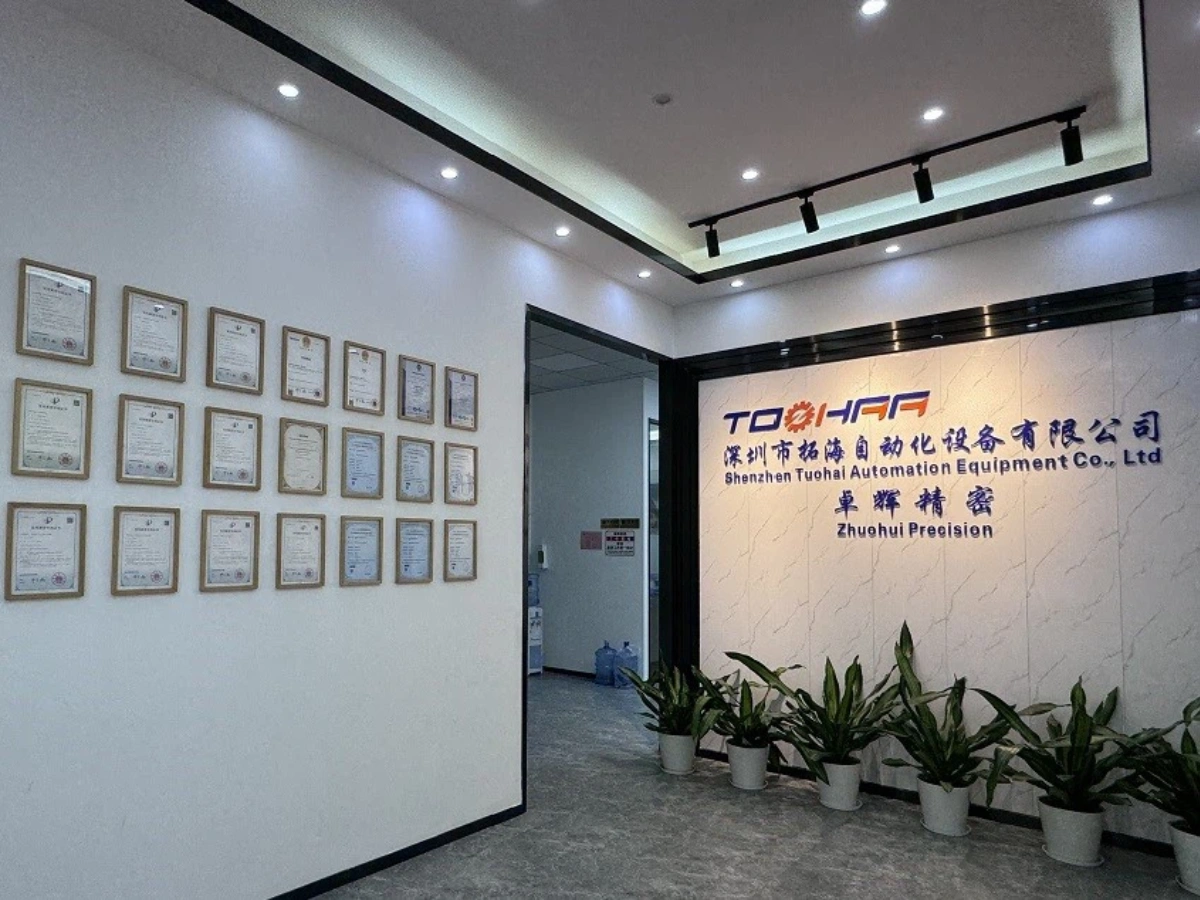


Certificate


FAQ
As one of the most professional turn-milling complex machining manufacturers and suppliers in China, we're featured by quality products and good service. Please rest assured to buy customized turn-milling complex machining from our factory. Contact us for quote.
turn milling with brush coating, turn milling with photocatalytic coatings, turn milling solutions