

Yo, what's up, folks! I'm a supplier of CNC aluminum parts, and today I wanna chat about the role of tool path in CNC aluminum parts machining. It's a pretty crucial aspect that can make or break the quality and efficiency of the whole process.
First off, let's talk about what a tool path actually is. In simple terms, a tool path is the route that the cutting tool follows during the machining process. It's like a roadmap for the tool, telling it where to go, how fast to move, and at what angle to approach the workpiece. This path is carefully planned and programmed using specialized software, taking into account various factors like the shape and dimensions of the part, the type of material being used, and the capabilities of the CNC machine.
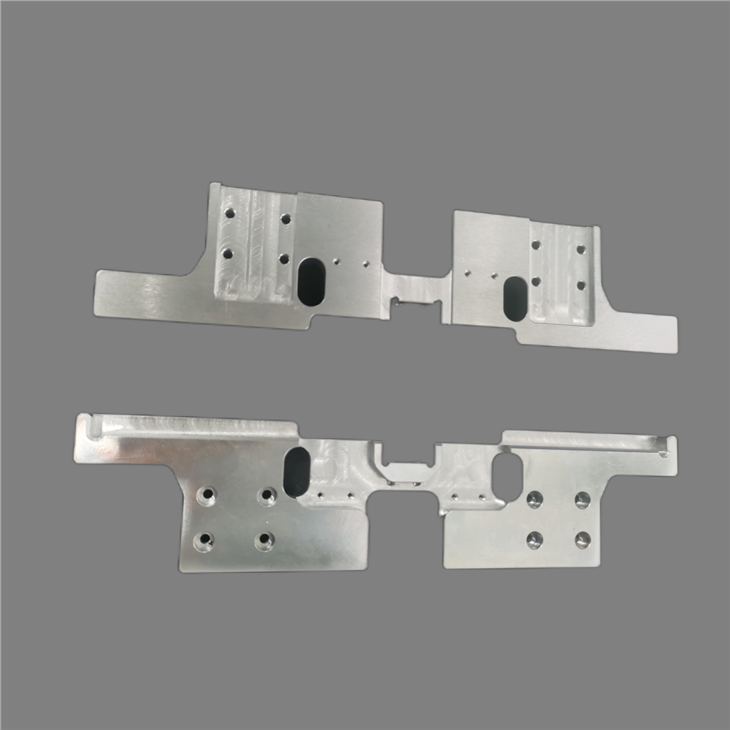
One of the most important roles of the tool path is ensuring accuracy and precision. When machining aluminum parts, even the slightest deviation from the intended dimensions can lead to parts that don't fit properly or don't function as intended. A well-designed tool path helps to minimize these errors by guiding the cutting tool with high precision. For example, in the production of High Precision CNC Machining Device Parts, the tool path is optimized to achieve tight tolerances, ensuring that each part meets the exact specifications required by the customer.
Another key role is improving surface finish. The way the tool moves along the workpiece can have a significant impact on the smoothness and quality of the surface. A good tool path can reduce tool marks, vibrations, and other imperfections, resulting in a better-looking and more functional part. In the case of High Precision Aluminum Parts, a smooth surface finish is often essential for applications where the part will be in contact with other components or where aesthetics are important.
Efficiency is also a major consideration. A well-planned tool path can help to reduce machining time and increase productivity. By minimizing unnecessary tool movements and optimizing the cutting strategy, the CNC machine can work more quickly and effectively. This not only saves time and energy but also reduces costs for both the supplier and the customer. For instance, in large-scale production runs of aluminum parts, a more efficient tool path can lead to significant savings over time.
The tool path also plays a role in tool life. The way the tool interacts with the workpiece can affect its wear and tear. A poorly designed tool path can cause excessive stress on the tool, leading to premature wear and breakage. On the other hand, a well-optimized tool path can distribute the cutting forces more evenly, extending the life of the tool and reducing the need for frequent tool changes. This is especially important in the machining of CNC Titanium Precision Parts, where titanium is a relatively hard and abrasive material that can quickly wear down cutting tools.
Now, let's talk about the different types of tool paths that are commonly used in CNC aluminum parts machining. One of the most basic types is the linear tool path, where the tool moves in a straight line from one point to another. This is often used for simple operations like facing or roughing. Another type is the circular tool path, which is used for operations like drilling or milling circular features. There are also more complex tool paths, such as helical tool paths, which are used for operations like threading or contouring.
The choice of tool path depends on several factors, including the shape and complexity of the part, the type of operation being performed, and the capabilities of the CNC machine. For example, if you're machining a part with a lot of curved surfaces, a more complex tool path like a spline or a NURBS (Non-Uniform Rational B-Spline) tool path may be required to achieve the desired shape.
In addition to the type of tool path, the parameters of the tool path also need to be carefully selected. These parameters include the feed rate, which is the speed at which the tool moves along the workpiece, the spindle speed, which is the rotational speed of the cutting tool, and the depth of cut, which is the amount of material removed by the tool in each pass. These parameters need to be optimized based on the material being machined, the type of tool being used, and the desired surface finish.
As a CNC aluminum parts supplier, I understand the importance of getting the tool path right. It's not just about making parts that look good; it's about making parts that work well and meet the needs of our customers. That's why we invest in the latest software and technology to ensure that our tool paths are as efficient and accurate as possible.
If you're in the market for high-quality CNC aluminum parts, we'd love to hear from you. Whether you need a single prototype or a large production run, we have the expertise and capabilities to meet your needs. Contact us today to discuss your project and get a quote. We're always happy to help and look forward to working with you.

References
- "CNC Machining Handbook" by John Doe
- "Advanced Manufacturing Technology" by Jane Smith
- Articles from leading industry magazines such as "Manufacturing Today" and "CNC World"