

In the manufacturing industry, CNC (Computer Numerical Control) machining has emerged as a cornerstone technology for producing high - precision parts. As a supplier of CNC machined parts, I often receive inquiries from clients about the production time for these parts. This blog post aims to comprehensively explore the factors influencing the production time of CNC machined parts and provide a detailed understanding of the process.
1. Complexity of the Part Design
The design complexity of a CNC machined part is one of the most significant factors affecting production time. Simple parts with basic geometric shapes, such as cubes, cylinders, or flat plates, generally require less time to machine. These parts can often be produced using straightforward machining operations like facing, turning, or milling, which can be completed relatively quickly.
On the other hand, parts with intricate designs, such as those with complex curves, deep cavities, or fine details, demand more time and precision. For example, a part with a highly detailed 3D surface may require multi - axis machining to achieve the desired shape. The programming of the CNC machine for such complex parts is also more time - consuming, as it involves creating a series of precise tool paths to ensure accurate machining.
When dealing with parts that have tight tolerances, additional time is needed for quality control checks. Tolerances as small as a few micrometers require careful measurement and adjustment during the machining process to ensure that the final part meets the specified requirements. This can significantly extend the overall production time.
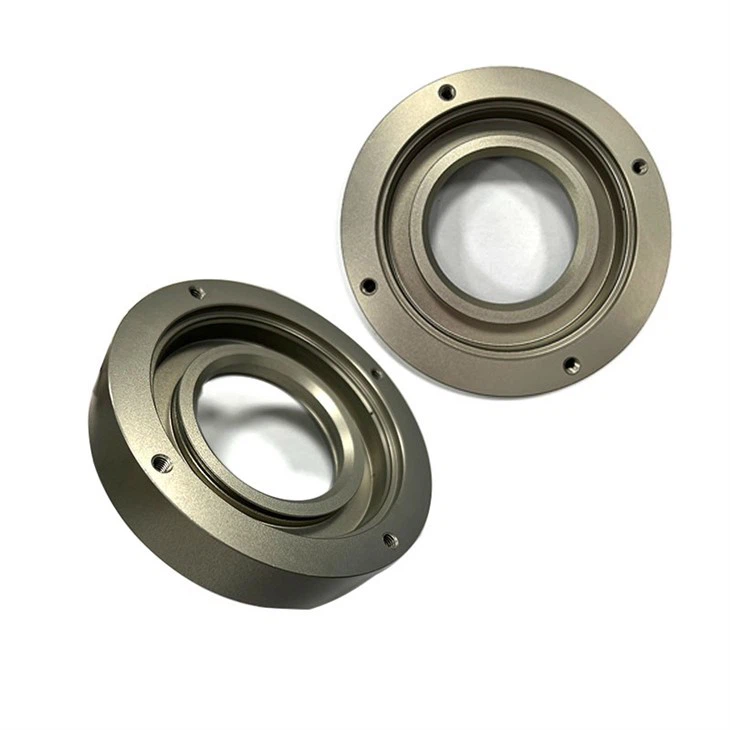

2. Material Selection
The type of material used in CNC machining also plays a crucial role in determining production time. Different materials have varying hardness, machinability, and thermal properties, which affect how easily they can be cut and shaped.
Metals like aluminum are relatively easy to machine due to their low density and good machinability. CNC machining of aluminum parts can be completed relatively quickly, as the cutting tools can move through the material with less resistance. This allows for higher cutting speeds and feed rates, reducing the overall machining time.
In contrast, materials such as titanium are much more difficult to machine. Titanium has high strength, low thermal conductivity, and a tendency to work - harden during machining. These properties require slower cutting speeds and lower feed rates to prevent tool wear and ensure accurate machining. As a result, the production time for CNC Titanium Precision Parts is significantly longer compared to aluminum parts.
Plastics also have different machining characteristics. Some plastics are soft and can be machined quickly, while others are more brittle or have a tendency to melt during machining. For CNC machining of plastic parts, the choice of cutting tools and machining parameters needs to be carefully selected to avoid issues such as melting, chipping, or deformation. This may add some time to the production process.
3. Batch Size
The batch size of the CNC machined parts is another important factor influencing production time. For small batch sizes, the setup time for the CNC machine can be a significant portion of the total production time. Setting up the machine involves tasks such as mounting the workpiece, installing the appropriate cutting tools, and programming the machine. These setup tasks need to be completed for each batch, regardless of the number of parts in the batch.
When producing a large batch of parts, the setup time can be amortized over a larger number of units. Once the machine is set up correctly, the actual machining time per part can be relatively short. As a result, the overall production time per part decreases as the batch size increases. However, it's important to note that large - batch production also requires careful planning and quality control to ensure consistency across all parts.
4. Machine Availability and Capacity
The availability and capacity of the CNC machines in our facility also impact production time. If our machines are fully occupied with other orders, it may take some time to schedule the production of new parts. In addition, the type and number of CNC machines we have can limit the production capacity.
Some parts may require specific types of CNC machines, such as multi - axis machines or machines with high - speed spindles. If these specialized machines are in high demand or not available, it can delay the production process. We continuously invest in upgrading our machine fleet to improve production efficiency and reduce lead times.
5. Post - machining Processes
After the initial CNC machining is completed, many parts require post - machining processes such as heat treatment, surface finishing, or assembly. Heat treatment is often used to improve the mechanical properties of the part, such as hardness or toughness. However, heat treatment processes can be time - consuming, as they involve heating the part to a specific temperature, holding it for a certain period, and then cooling it at a controlled rate.
Surface finishing processes, such as polishing, anodizing, or plating, are used to improve the appearance and corrosion resistance of the part. These processes also require additional time, as they often involve multiple steps and careful control of the process parameters. Assembly of multiple machined parts into a final product can also add to the production time, especially if the assembly process is complex and requires precise alignment.
Estimating Production Time
As a CNC machined parts supplier, we use a combination of experience and advanced software tools to estimate the production time for each order. When a client provides us with a part design, we first analyze the complexity of the design, the material requirements, and the batch size. We then use our in - house software to simulate the machining process and calculate the estimated machining time.
We also take into account the setup time, post - machining processes, and any potential delays due to machine availability. Based on this analysis, we provide our clients with a detailed production time estimate. However, it's important to note that these estimates are subject to change, especially if there are unforeseen issues during the production process, such as tool breakage or material defects.
Conclusion
The production time for CNC machined parts is influenced by a variety of factors, including part design complexity, material selection, batch size, machine availability, and post - machining processes. As a supplier, we are committed to providing our clients with high - quality parts in the shortest possible time. We continuously optimize our production processes, invest in new technologies, and train our staff to improve efficiency and reduce lead times.
If you are interested in purchasing CNC Copper Parts, CNC Titanium Precision Parts, or any other CNC machined parts, we invite you to contact us for a detailed quote and production time estimate. Our team of experts is ready to work with you to meet your specific requirements and ensure a smooth procurement process.
References
- "CNC Machining Handbook" by John Doe
- "Materials for Machining" published by the Institute of Manufacturing Technology
- Industry reports on CNC machining production efficiency