

Elasticity is a fundamental concept in materials science and engineering, especially when it comes to CNC steel parts. As a supplier of CNC steel parts, understanding the elasticity of these components is crucial for both us and our customers. In this blog, we will delve into what the elasticity of CNC steel parts is, why it matters, and how it impacts the performance and applications of these parts.
What is Elasticity?
Elasticity refers to the ability of a material to deform under stress and return to its original shape when the stress is removed. This property is governed by Hooke's Law, which states that the force required to stretch or compress an elastic material is proportional to the displacement of the material from its equilibrium position. Mathematically, it can be expressed as F = kx, where F is the force applied, k is the spring constant, and x is the displacement.

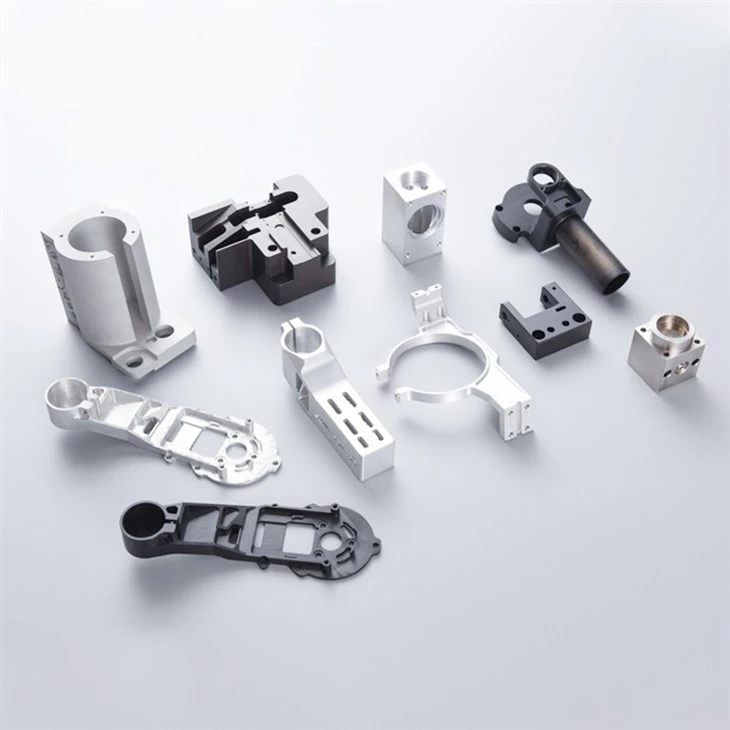
In the context of CNC steel parts, elasticity is a measure of how much the part can be bent, stretched, or compressed without undergoing permanent deformation. This property is essential because it determines the part's ability to withstand mechanical loads and maintain its structural integrity over time.
Elastic Modulus of Steel
The elastic modulus, also known as Young's modulus, is a key parameter that quantifies the elasticity of a material. It is defined as the ratio of stress (force per unit area) to strain (deformation per unit length) within the elastic range of the material. For steel, the elastic modulus typically ranges from 190 to 210 GPa (gigapascals), depending on the specific type and composition of the steel.
A high elastic modulus indicates that the material is stiff and requires a large amount of force to deform it. Conversely, a low elastic modulus means that the material is more flexible and can be easily deformed under relatively small loads. The elastic modulus of steel makes it an ideal choice for applications where high strength and stiffness are required, such as in the automotive, aerospace, and construction industries.
Importance of Elasticity in CNC Steel Parts
The elasticity of CNC steel parts plays a vital role in their performance and functionality. Here are some key reasons why elasticity is important:
- Load Bearing Capacity: Elasticity allows CNC steel parts to absorb and distribute mechanical loads without permanent deformation. This is crucial in applications where the parts are subjected to high stresses, such as in machinery, bridges, and structural components.
- Vibration Damping: Elastic materials can absorb and dissipate energy, which helps to reduce vibrations and noise. This is beneficial in applications where smooth operation and reduced noise levels are desired, such as in precision instruments and automotive engines.
- Fatigue Resistance: Elasticity enables CNC steel parts to withstand repeated loading and unloading cycles without failure. This is important in applications where the parts are subjected to cyclic stresses, such as in rotating machinery and springs.
- Assembly and Installation: Elasticity allows CNC steel parts to be easily assembled and installed, as they can be deformed slightly to fit into place without causing damage. This is particularly useful in applications where tight tolerances are required, such as in the electronics and medical industries.
Factors Affecting the Elasticity of CNC Steel Parts
Several factors can affect the elasticity of CNC steel parts, including:
- Material Composition: The type and composition of the steel used can have a significant impact on its elastic properties. For example, alloy steels with different chemical compositions may have different elastic moduli and yield strengths.
- Heat Treatment: Heat treatment processes, such as annealing, quenching, and tempering, can alter the microstructure of the steel and affect its elasticity. For example, quenching and tempering can increase the strength and hardness of the steel, but may also reduce its ductility and elasticity.
- Manufacturing Process: The manufacturing process used to produce the CNC steel parts can also affect their elasticity. For example, machining operations, such as cutting, grinding, and milling, can introduce residual stresses into the material, which can affect its elastic properties.
- Environmental Conditions: The environmental conditions in which the CNC steel parts are used can also affect their elasticity. For example, exposure to high temperatures, corrosive chemicals, and mechanical wear can degrade the material and reduce its elasticity over time.
Applications of CNC Steel Parts with High Elasticity
CNC steel parts with high elasticity are used in a wide range of applications, including:
- Automotive Industry: Elastic CNC steel parts are used in various automotive components, such as suspension systems, engine parts, and transmission components. These parts need to be able to withstand high stresses and vibrations while maintaining their structural integrity.
- Aerospace Industry: In the aerospace industry, CNC steel parts with high elasticity are used in aircraft structures, landing gear, and engine components. These parts need to be lightweight, strong, and able to withstand extreme environmental conditions.
- Construction Industry: Elastic CNC steel parts are used in building structures, bridges, and other infrastructure projects. These parts need to be able to support heavy loads and resist deformation over time.
- Medical Industry: In the medical industry, CNC steel parts with high elasticity are used in surgical instruments, implants, and medical devices. These parts need to be biocompatible, corrosion-resistant, and able to withstand repeated use.
Our Expertise in CNC Steel Parts
As a leading supplier of CNC steel parts, we have extensive experience and expertise in manufacturing high-quality parts with excellent elastic properties. We use advanced CNC machining technology and state-of-the-art equipment to ensure the precision and accuracy of our parts. Our team of skilled engineers and technicians works closely with our customers to understand their specific requirements and provide customized solutions that meet their needs.
We offer a wide range of CNC steel parts, including shafts, gears, bolts, nuts, and other custom components. Our parts are made from high-quality steel materials and are available in various sizes, shapes, and finishes. We also provide value-added services, such as heat treatment, surface finishing, and assembly, to ensure that our parts meet the highest standards of quality and performance.
If you are looking for a reliable supplier of CNC steel parts with excellent elasticity, please feel free to contact us. We would be happy to discuss your requirements and provide you with a quote. You can also visit our website to learn more about our products and services:
We look forward to working with you and providing you with the best possible solutions for your CNC steel part needs.
References
- Callister, W. D., & Rethwisch, D. G. (2012). Materials Science and Engineering: An Introduction. Wiley.
- Ashby, M. F., & Jones, D. R. H. (2012). Engineering Materials 1: An Introduction to Properties, Applications, and Design. Butterworth-Heinemann.
- Budynas, R. G., & Nisbett, J. K. (2011). Shigley's Mechanical Engineering Design. McGraw-Hill.