

Hey there! As a supplier of CNC machined parts, I've seen firsthand how crucial it is to get the design right. CNC machining is a super precise manufacturing process that uses computerized controls to operate machine tools. It's used to make all sorts of parts for different industries, from aerospace to automotive, and even in medical devices. In this blog, I'm gonna share some key design considerations for CNC machined parts.
Material Selection
The first thing you gotta think about is the material. Different materials have different properties, and these properties can have a big impact on the machining process and the final part.
- Metals: Metals are a popular choice for CNC machining. For example, aluminum is lightweight, corrosion - resistant, and easy to machine. Our High Precision Aluminum Parts are in high demand because of these qualities. Titanium is another great option. It's strong, has a high strength - to - weight ratio, and is biocompatible, which makes it ideal for medical and aerospace applications. Check out our CNC Titanium Precision Parts. Brass is also commonly used. It has good machinability, electrical conductivity, and a nice appearance. We offer High Precision CNC Brass Parts that meet high - quality standards.
- Plastics: Plastics can be a good choice too. They're lightweight, cost - effective, and can be molded into complex shapes. Some plastics have excellent chemical resistance, which is useful in chemical processing industries.
When choosing a material, you need to consider factors like the part's function, the environment it will be used in, and the cost.
Tolerances
Tolerances are the allowable variation in the dimensions of a part. In CNC machining, tight tolerances mean higher precision, but they also mean higher costs.
- Design for Manufacturability: You should design your part with reasonable tolerances. If you specify overly tight tolerances that aren't really necessary for the part's function, you'll end up paying more for machining. For example, if a part only needs to fit loosely into another component, there's no need to specify a super - tight tolerance.
- Machining Capabilities: You also need to be aware of the machining capabilities of your CNC machines. Different machines have different levels of precision. Our machines are capable of achieving high - precision tolerances, but it's still important to balance the design requirements with what's practically achievable.
Geometric Design
The shape and geometry of the part are also very important.
- Avoid Sharp Corners: Sharp corners can cause stress concentrations in the part, which can lead to cracking or failure. It's better to use rounded corners instead. Rounded corners are also easier to machine, which can save time and money.
- Simplify Complex Shapes: Complex shapes can be more difficult and time - consuming to machine. If possible, try to simplify the design. You can break a complex part into smaller, more manageable sub - parts and then assemble them later.
Surface Finish
The surface finish of a part can affect its appearance, functionality, and durability.
- Function Requirements: For some parts, a smooth surface finish is necessary. For example, in a part that needs to slide against another surface, a smooth finish can reduce friction. In other cases, a rough surface finish might be acceptable or even desirable. For example, a part that needs to grip another surface might benefit from a rougher finish.
- Machining Processes: Different machining processes can produce different surface finishes. For example, milling can produce a relatively smooth finish, while turning might result in a slightly different texture. You need to choose the right machining process based on the desired surface finish.
Hole Design
Holes are a common feature in CNC machined parts, and there are some important design considerations for them.
- Hole Size and Depth: The size and depth of a hole can affect the machining process. Deep holes can be more difficult to drill, especially if they have a small diameter. You need to make sure that the hole size and depth are within the capabilities of the CNC machine.
- Threaded Holes: If you need threaded holes, you need to specify the thread type, pitch, and depth accurately. Threaded holes can add functionality to the part, but they also require more precise machining.
Draft Angles
Draft angles are angles added to the vertical walls of a part.
- Ejection from the Mold: In some cases, especially when using a mold for secondary operations, draft angles are necessary to allow the part to be ejected from the mold easily. Without proper draft angles, the part might get stuck in the mold, which can damage the part or the mold itself.
- Machining Ease: Draft angles can also make the machining process easier. They can reduce the cutting forces and improve the surface finish of the part.
Wall Thickness
The wall thickness of a part is another important consideration.
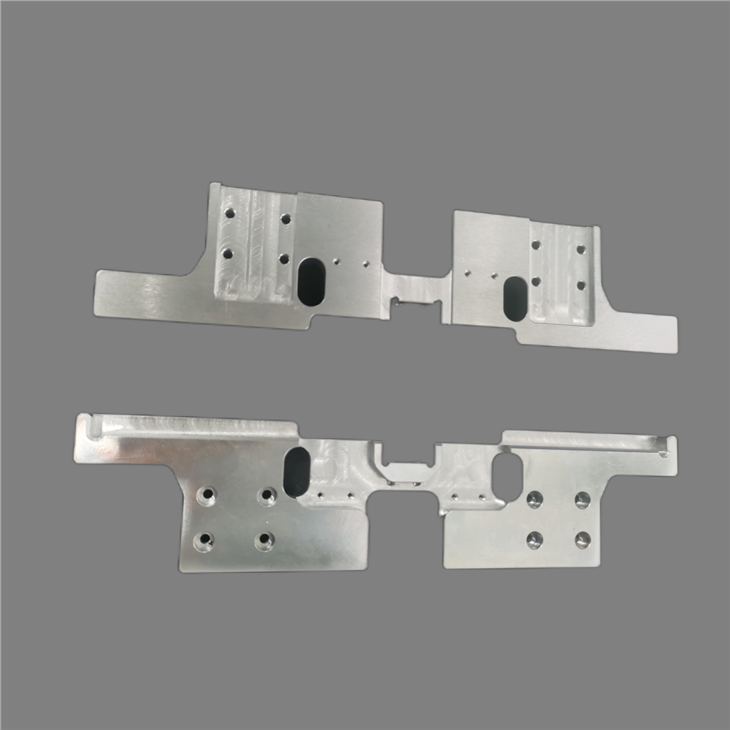

- Uniform Wall Thickness: It's best to design parts with uniform wall thickness. Non - uniform wall thickness can cause problems during machining, such as warping or uneven cooling. If you need to change the wall thickness in a part, make the transition gradual.
- Minimum Wall Thickness: You also need to consider the minimum wall thickness that the material and the machining process can support. If the wall is too thin, it might be difficult to machine or might not be strong enough to withstand the forces it will be subjected to.
Assembly and Joining
If your part needs to be assembled with other components, you need to think about how it will be joined.
- Joining Methods: There are different joining methods, such as welding, brazing, screwing, and gluing. Each method has its own advantages and disadvantages. You need to choose the right method based on the materials, the design of the part, and the application.
- Alignment Features: You should also design alignment features into the part to ensure that it can be assembled correctly. For example, you can add dowel pins or alignment holes to help with the alignment of two parts during assembly.
Cost Considerations
Finally, cost is always a factor in any design project.
- Material Cost: As mentioned earlier, different materials have different costs. You need to balance the material properties with the cost. Sometimes, a slightly more expensive material might be a better choice in the long run if it can reduce machining costs or improve the part's performance.
- Machining Time: The complexity of the design and the machining processes required can also affect the cost. A simpler design that can be machined quickly will generally be less expensive than a complex design that takes a long time to machine.
In conclusion, designing CNC machined parts requires careful consideration of many factors. By taking these design considerations into account, you can ensure that your parts are not only functional and high - quality but also cost - effective to manufacture. If you're in the market for CNC machined parts, we'd love to work with you. Whether you have a specific design in mind or need help with the design process, our team of experts is here to assist you. Just reach out to us for a consultation, and let's start creating the perfect CNC machined parts for your needs.
References
- "CNC Machining Handbook"
- "Design for Manufacturing and Assembly Principles"