

CNC turning, short for Computer Numerical Control turning, is a highly precise and efficient machining process widely used in the manufacturing industry. As a CNC turning supplier, I'm excited to share with you how this remarkable technology works and its significance in producing high - quality parts.
The Basics of CNC Turning
At its core, CNC turning is a subtractive manufacturing process. It involves removing material from a workpiece to create a desired shape. The process uses a lathe, which is a machine tool that rotates the workpiece on its axis while a cutting tool is fed into it to remove material. The key difference between traditional turning and CNC turning lies in the control system. In traditional turning, the operator manually controls the movement of the cutting tool, while in CNC turning, the movements are controlled by a computer program.
The CNC Turning Machine Setup
Before the actual turning process begins, several important steps are involved in setting up the CNC turning machine.
1. Workpiece Selection and Preparation
The first step is to select the appropriate workpiece material. Common materials used in CNC turning include metals such as aluminum, steel, brass, and stainless steel, as well as plastics and composites. The workpiece is usually in the form of a cylindrical bar stock, but it can also be a pre - machined part that requires further turning operations. Once the material is selected, it needs to be properly prepared. This may involve cutting the bar stock to the appropriate length and cleaning the surface to ensure good adhesion and accurate machining.
2. Tool Selection
Choosing the right cutting tool is crucial for the success of the CNC turning process. Different types of cutting tools are available, each designed for specific materials and machining operations. For example, carbide cutting tools are commonly used for machining hard materials like steel, while high - speed steel (HSS) tools are suitable for softer materials such as aluminum and brass. The tool geometry, including the rake angle, clearance angle, and cutting edge radius, also affects the cutting performance and the quality of the machined surface.
3. Programming
The heart of CNC turning is the computer program that controls the movement of the cutting tool. The program is created using a Computer - Aided Manufacturing (CAM) software. The programmer defines the machining operations, such as facing, turning, boring, threading, and grooving, and specifies the cutting parameters, including the feed rate, spindle speed, and depth of cut. The program is then transferred to the CNC controller of the turning machine.
4. Machine Setup
Once the program is ready, the operator sets up the CNC turning machine. This includes mounting the workpiece in the chuck or collet of the lathe, installing the cutting tool in the tool post, and calibrating the machine to ensure accurate positioning. The operator also checks the coolant system to make sure it is working properly, as coolant is used to lubricate the cutting tool, reduce heat, and flush away the chips.
The CNC Turning Process
After the machine setup is complete, the CNC turning process can begin.
1. Spindle Rotation
The spindle of the lathe starts to rotate the workpiece at the specified speed. The spindle speed is determined by the material being machined, the diameter of the workpiece, and the cutting tool. For example, when machining a small - diameter aluminum workpiece, a higher spindle speed can be used compared to a large - diameter steel workpiece.
2. Cutting Tool Movement
The cutting tool is fed into the rotating workpiece according to the instructions in the CNC program. The tool moves along the X and Z axes of the lathe to perform different machining operations. For instance, in a facing operation, the tool moves along the X - axis to remove material from the end face of the workpiece, creating a flat surface. In a turning operation, the tool moves along the Z - axis to reduce the diameter of the workpiece and create a cylindrical shape.
3. Chip Formation and Removal
As the cutting tool removes material from the workpiece, chips are formed. The shape and size of the chips depend on the cutting parameters and the material being machined. For example, in machining ductile materials like aluminum, long and continuous chips are often produced, while in machining brittle materials like cast iron, short and discontinuous chips are formed. The coolant helps to flush the chips away from the cutting area, preventing them from interfering with the cutting process and damaging the workpiece or the cutting tool.
4. Multiple Operations
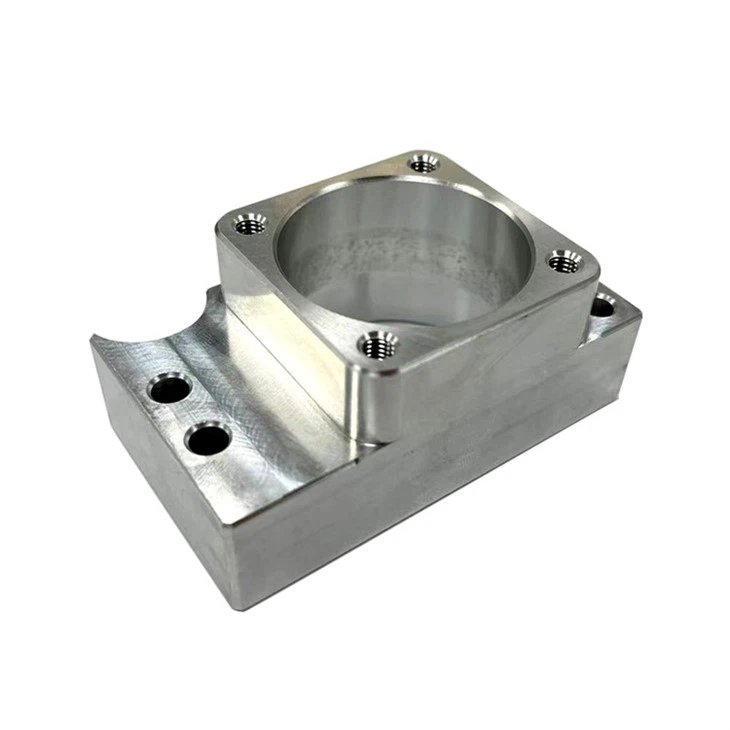
In many cases, a single workpiece may require multiple turning operations to achieve the desired shape and dimensions. For example, after rough turning to remove the bulk of the material, a finishing operation may be performed to improve the surface finish and dimensional accuracy. Threading operations can also be carried out to create internal or external threads on the workpiece.

Quality Control in CNC Turning
As a CNC turning supplier, quality control is of utmost importance. During the CNC turning process, several measures are taken to ensure the quality of the machined parts.
1. In - process Inspection
Operators use various measuring tools, such as calipers, micrometers, and gauges, to measure the dimensions of the workpiece during the machining process. This allows them to detect any deviations from the design specifications early and make adjustments to the cutting parameters or the CNC program if necessary.
2. Post - process Inspection
After the machining is completed, the parts are thoroughly inspected using more precise measuring equipment, such as coordinate measuring machines (CMMs). CMMs can measure the dimensions, shape, and position of the parts with high accuracy, ensuring that they meet the required tolerances. Surface finish measurement is also carried out using profilometers to ensure that the surface quality meets the customer's requirements.
Applications of CNC Turning
CNC turning is widely used in various industries due to its high precision and efficiency.
1. Automotive Industry
In the automotive industry, CNC turning is used to produce a wide range of components, such as engine shafts, pistons, gears, and brake rotors. The high precision and repeatability of CNC turning ensure that these components meet the strict quality standards required for automotive applications.
2. Aerospace Industry
The aerospace industry demands parts with extremely high precision and quality. CNC turning is used to manufacture components such as turbine shafts, landing gear parts, and hydraulic fittings. The ability to machine complex shapes and tight tolerances makes CNC turning an ideal process for aerospace applications.
3. Medical Industry
In the medical field, CNC turning is used to produce medical devices and implants, such as surgical instruments, bone screws, and dental implants. The biocompatible materials used in medical applications, such as titanium and stainless steel, can be precisely machined using CNC turning to ensure the safety and effectiveness of the medical products.
4. Automation Equipment
CNC turning plays a crucial role in the production of parts for automation equipment. Stainless Steel CNC Turning Parts For Automation Equipment are widely used in robots, conveyor systems, and other automated machinery. These parts require high precision and durability to ensure the smooth operation of the automation equipment.
Customization and Surface Finishes
As a CNC turning supplier, we understand that different customers have different requirements. We offer CNC Turning Parts With Custom Surface Finishes to meet the specific needs of our clients. Surface finishes can range from a simple machined finish to more advanced finishes such as polishing, anodizing, and plating. These surface treatments not only improve the appearance of the parts but also enhance their corrosion resistance, wear resistance, and other properties.
We also specialize in OEM CNC Machining Turning Parts. Our team of experienced engineers and technicians can work closely with customers to understand their design requirements and produce high - quality custom - made parts. Whether it's a small - batch prototype or a large - scale production run, we have the capabilities and expertise to deliver the parts on time and within budget.
Conclusion
CNC turning is a versatile and powerful machining process that offers high precision, efficiency, and flexibility. As a CNC turning supplier, we are committed to providing our customers with the best - quality parts and excellent service. If you are in need of CNC turning services or have any questions about our products, please feel free to contact us for procurement and further discussions. We look forward to working with you to bring your ideas to life.
References
- “Manufacturing Engineering and Technology” by Serope Kalpakjian and Steven R. Schmid.
- “CNC Programming Handbook” by Mark Albert.
- Industry - specific technical papers and research on CNC machining processes.