

Can CNC machining be used for machining composite materials? That's a question I get asked a lot as a supplier of CNC machining services. I'm here to tell you that the answer is a resounding yes! In this blog, I'll dive into the details of using CNC machining for composite materials, sharing my insights and experiences in the field.
First off, let's talk about what composite materials are. Composites are made by combining two or more different materials with distinct properties to create a new material with enhanced characteristics. These materials are known for their high strength-to-weight ratio, corrosion resistance, and excellent mechanical properties. Common types of composites include carbon fiber reinforced polymers (CFRP), glass fiber reinforced polymers (GFRP), and aramid fiber reinforced polymers.

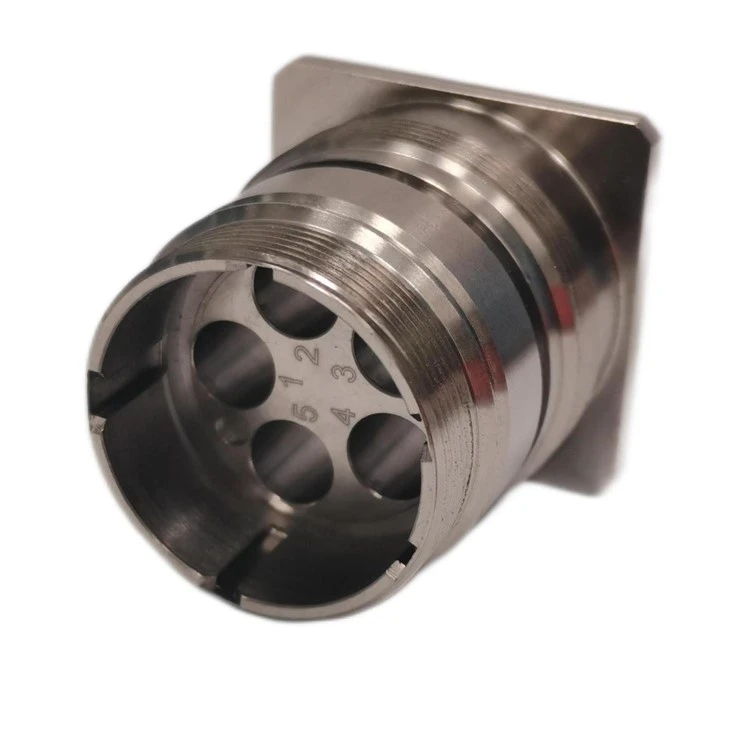
Now, why would you want to use CNC machining for composite materials? Well, CNC machining offers a high level of precision and repeatability, which is crucial when working with composites. Whether you're making parts for aerospace, automotive, or sporting goods, you need to ensure that each part meets the exact specifications. CNC machines can achieve tight tolerances and produce complex geometries that would be difficult or impossible to create using traditional machining methods.
One of the key advantages of CNC machining for composite materials is the ability to control the cutting process. The computer numerical control system allows for precise control of the cutting speed, feed rate, and depth of cut. This means that you can optimize the machining parameters to minimize the risk of delamination, fiber pull-out, and other common issues that can occur when machining composites.
Another benefit is the versatility of CNC machines. They can be used for a variety of operations, including milling, drilling, turning, and routing. This makes it possible to create a wide range of parts from composite materials, from simple brackets to complex structural components.
However, machining composite materials is not without its challenges. Composites are often abrasive and can cause rapid tool wear. To overcome this, it's important to use the right cutting tools. Carbide and diamond-coated tools are commonly used for machining composites because they offer high wear resistance and can maintain their cutting edge for longer periods.
Coolant is also an important consideration when machining composites. The heat generated during the cutting process can cause thermal damage to the material, leading to reduced mechanical properties. Using a coolant can help to dissipate the heat and prevent thermal damage. However, it's important to choose a coolant that is compatible with the composite material to avoid chemical reactions.
At our company, we have extensive experience in CNC machining of composite materials. We offer a Custom CNC Machining Fabrication Service that caters to a wide range of industries. Our team of experts is well-trained in the latest machining techniques and uses state-of-the-art CNC machines to ensure the highest quality of parts.
We also specialize in China OEM CNC Parts. Our manufacturing process is designed to meet the strictest quality standards, and we work closely with our clients to understand their specific requirements and deliver customized solutions.
In addition, we offer Tuohai CNC Machining Custom Parts. These parts are made to order, giving our clients the flexibility to get exactly what they need. Whether you need a single prototype or a large production run, we can handle it.
If you're in the market for CNC machining services for composite materials, don't hesitate to get in touch. We're always ready to discuss your project and provide you with a customized quote. Our team is committed to delivering high-quality parts on time and at a competitive price.
In conclusion, CNC machining is a viable and effective method for machining composite materials. With the right tools, techniques, and expertise, it's possible to overcome the challenges associated with machining composites and produce high-quality parts. If you have any questions or need further information, feel free to reach out. We look forward to working with you on your next project.
References
- Mallick, P. K. (2007). Fiber-reinforced composites: materials, manufacturing, and design. CRC press.
- Dow, S. M., & Turley, D. L. (2001). Drilling of fiber-reinforced plastic composites: A review. Journal of Materials Processing Technology, 115(1), 3-15.