

Hey there! As a supplier of CNC custom parts, I often get asked all sorts of questions about what we can and can't do. One question that's been popping up more frequently lately is, "Can CNC custom parts be made with a specific magnetic property?" Well, let's dive right into this topic and explore the ins and outs.
First off, let's talk a bit about what CNC machining is. CNC, which stands for Computer Numerical Control, is a process used to create custom - made parts with high precision. It uses computers to control machine tools like mills, lathes, routers, and grinders. This technology allows us to fabricate parts in a wide range of shapes and sizes, catering to various industries such as automotive, aerospace, electronics, and jewelry making. If you're interested in some high - end stuff we make, check out our High Precision CNC Machining Device Parts.
Now, back to the magnetic property question. The short answer is yes, we can make CNC custom parts with specific magnetic properties, but it's not as simple as just hitting a button on a CNC machine. The magnetic properties of a part are determined mainly by the material we use.
There are different types of magnetic materials that we can work with during the CNC machining process. For example, ferromagnetic materials like iron, nickel, and cobalt are well - known for their strong magnetic properties. These materials have a high magnetic permeability, which means they can be easily magnetized and demagnetized. By using these materials, we can create parts with strong magnetic fields, which are useful in applications like electric motors and generators.
On the other hand, there are also paramagnetic and diamagnetic materials. Paramagnetic materials have a weak attraction to magnetic fields, while diamagnetic materials are slightly repelled by them. These materials are used in applications where a more subtle magnetic effect is needed, like in some scientific instruments.
When it comes to making parts with specific magnetic properties, the choice of material is just the beginning. We also need to consider the machining process itself. During CNC machining, the cutting forces and heat generated can potentially affect the magnetic properties of the part. For instance, excessive heat can cause changes in the crystal structure of the magnetic material, which in turn can alter its magnetic behavior. So, we have to carefully control parameters such as cutting speed, feed rate, and coolant usage to minimize these effects.
Another important aspect is post - machining treatment. Sometimes, after the part is machined, we may need to perform additional processes like heat treatment or magnetization. Heat treatment can be used to enhance the magnetic properties of the material by adjusting its microstructure. For example, annealing can relieve internal stresses in the part, which can improve its magnetic performance. Magnetization is the process of aligning the magnetic domains in the material to create a desired magnetic field. This can be achieved using specialized equipment that applies a strong magnetic field to the part.
Let's take a look at some real - world applications. In the automotive industry, parts with specific magnetic properties are used in sensors, actuators, and ignition systems. These parts need to have precise magnetic characteristics to ensure accurate operation. We've also seen a growing demand in the jewelry industry. Some Jewelry Accessories CNC Machining projects require parts with unique magnetic effects for decorative or functional purposes. For example, magnetic clasps that are both secure and easy to use.
Now, you might be wondering about the limitations. Well, not all materials with magnetic properties are easy to machine. Some hard magnetic materials can be quite brittle, which makes them prone to cracking during the machining process. Also, achieving extremely precise magnetic properties can be a challenge, especially when dealing with complex part geometries. We often have to work closely with our clients to understand their exact requirements and find the best solutions.
In addition to material and machining considerations, cost is also a factor. Magnetic materials, especially those with high - end properties, can be more expensive than non - magnetic ones. And the additional processes like heat treatment and magnetization add to the overall cost. But hey, we always try to offer the best value for our customers, making sure that they get high - quality parts that meet their needs without breaking the bank.

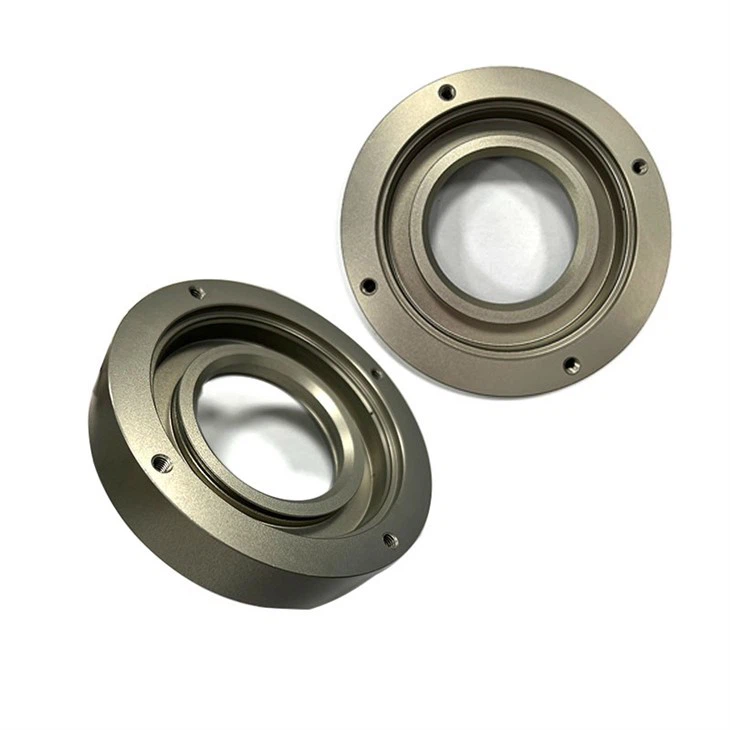
If you're thinking about CNC copper parts, we've got you covered too. Copper itself is not magnetic, but sometimes it's used in combination with magnetic materials in certain applications. For more details on our CNC Copper Parts, click on the link.
In conclusion, making CNC custom parts with specific magnetic properties is definitely possible, but it requires a deep understanding of materials science, machining techniques, and post - treatment processes. We've got a team of experts here who are well - versed in all these areas, and we're always up for a challenge. Whether you need a small batch of prototype parts or a large - scale production run, we can work with you to bring your ideas to life.
If you've got a project in mind or just want to learn more about our CNC custom parts services, don't hesitate to reach out and start a conversation. We're eager to discuss how we can meet your needs and provide you with top - notch parts.
References
- Callister, W. D., & Rethwisch, D. G. (2010). Materials Science and Engineering: An Introduction. John Wiley & Sons.
- Groover, M. P. (2010). Fundamentals of Modern Manufacturing: Materials, Processes, and Systems. John Wiley & Sons.