

Are CNC Machined Parts Suitable for High - Precision Applications?
In today's modern manufacturing landscape, the demand for high - precision parts is on the rise across various industries. From aerospace to medical devices, the need for components with tight tolerances and excellent surface finishes cannot be overstated. As a reliable CNC machined parts supplier, I am often asked whether CNC machined parts are suitable for high - precision applications. In this blog post, I will explore this question in detail and provide insights based on my experience in the industry.
The Basics of CNC Machining
CNC, or Computer Numerical Control, machining is a manufacturing process that uses pre - programmed computer software to control the movement of factory tools and machinery. This technology enables the production of highly complex and precise parts that would be extremely difficult or impossible to create using traditional manual machining methods.
CNC machining offers several advantages, which make it an attractive option for high - precision applications. Firstly, it provides a high level of repeatability. Once a program is set up, the CNC machine can produce identical parts with the same level of precision over and over again. This is crucial in industries where consistent quality is paramount, such as the automotive and electronics sectors.
Secondly, CNC machines are capable of working with a wide range of materials, including metals like aluminum, titanium, and steel, as well as plastics and composites. This versatility allows manufacturers to choose the most appropriate material for their specific application, taking into account factors such as strength, weight, corrosion resistance, and cost.
Precision Achievable with CNC Machining
The precision achievable with CNC machining is truly remarkable. Modern CNC machines can produce parts with tolerances as tight as a few micrometers. This high level of precision is made possible by the advanced control systems and cutting tools used in CNC machining.
The control systems in CNC machines are designed to execute commands with extreme accuracy. They can precisely control the movement of the cutting tool in multiple axes, allowing for the creation of complex geometries. For example, in the production of CNC Titanium Precision Parts, the CNC machine can accurately shape the titanium material to meet the exact specifications required for aerospace or medical applications.
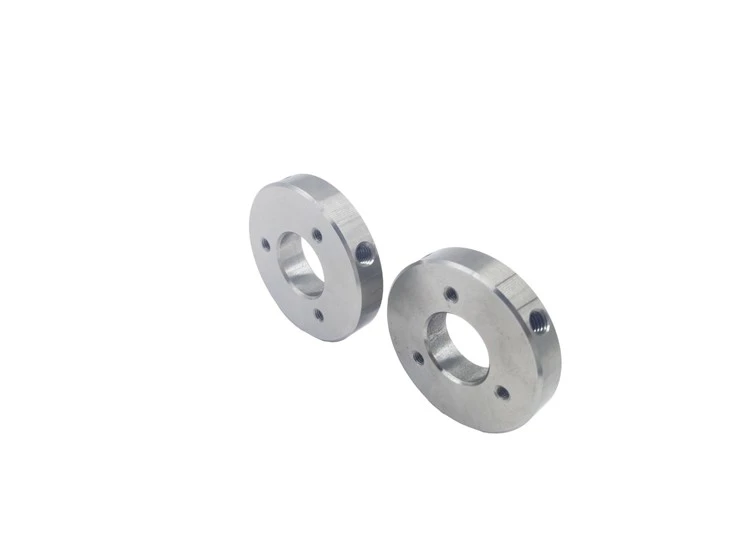

Cutting tools used in CNC machining are also engineered for high precision. They are made from high - quality materials such as carbide and can be sharpened to very fine edges. These cutting tools are designed to remove material in a controlled manner, ensuring that the final part meets the desired dimensional and surface finish requirements.
Applications of CNC Machined Parts in High - Precision Industries
Aerospace Industry
The aerospace industry is one of the most demanding sectors when it comes to high - precision parts. Components used in aircraft engines, avionics systems, and airframes require extremely tight tolerances and high levels of reliability. CNC machined parts are widely used in this industry due to their ability to meet these strict requirements.
For example, turbine blades in aircraft engines are critical components that must be machined with high precision. The shape and dimensions of these blades directly affect the engine's performance and efficiency. CNC machining allows for the production of turbine blades with complex aerodynamic profiles and tight tolerances, ensuring optimal engine operation.
Medical Industry
In the medical industry, precision is a matter of life and death. CNC machined parts are used in a variety of medical devices, such as surgical instruments, implants, and diagnostic equipment. These parts must be manufactured with the highest level of precision to ensure proper functionality and patient safety.
For instance, High Precision CNC Machining Device Parts are essential for the production of dental implants. The implants need to fit perfectly into the patient's jawbone, and any deviation from the specified dimensions can lead to complications. CNC machining enables the production of dental implants with precise dimensions and smooth surface finishes, improving the success rate of implant surgeries.
Electronics Industry
The electronics industry is constantly evolving, with a growing demand for smaller, faster, and more powerful devices. CNC machined parts play a crucial role in this industry by providing the precision components needed for electronic devices.
Printed circuit boards (PCBs) and connectors are examples of high - precision parts that are often produced using CNC machining. The tiny holes and traces on PCBs must be machined with extreme accuracy to ensure proper electrical connections. CNC machining can achieve the high levels of precision required for these components, enabling the production of high - performance electronic devices.
Factors Affecting the Precision of CNC Machined Parts
While CNC machining is capable of achieving high precision, several factors can affect the final accuracy of the parts.
Machine Quality
The quality of the CNC machine itself is a significant factor. High - end CNC machines are equipped with advanced control systems, high - precision motors, and rigid structures, which can help to minimize errors and ensure consistent precision. Investing in a high - quality machine is essential for producing parts with extremely tight tolerances.
Cutting Tools
The choice and condition of cutting tools also have a major impact on precision. Worn - out or dull cutting tools can cause inaccuracies in the machining process, leading to parts that do not meet the required specifications. Regular tool inspection and replacement are necessary to maintain high precision.
Material Properties
The properties of the material being machined can affect the precision of the final part. Some materials, such as hard metals, may be more difficult to machine with high precision due to their high strength and hardness. Additionally, materials with different thermal expansion coefficients can cause dimensional changes during the machining process, which need to be carefully considered.
Our Capabilities as a CNC Machined Parts Supplier
As a CNC machined parts supplier, we are committed to providing high - precision parts that meet the strict requirements of our customers. We have a team of experienced engineers and technicians who are well - versed in the latest CNC machining technologies.
We use state - of - the - art CNC machines, which are regularly maintained and calibrated to ensure optimal performance. Our cutting tools are carefully selected and monitored to maintain high precision during the machining process. We also have a comprehensive quality control system in place, which includes inspection at every stage of the production process to ensure that the final parts meet the desired specifications.
We offer a wide range of High Precision Aluminum Parts, titanium parts, and other materials, catering to the diverse needs of different industries. Whether you need small, intricate components or large, complex parts, we have the expertise and capabilities to deliver high - quality results.
Conclusion
In conclusion, CNC machined parts are highly suitable for high - precision applications. The advanced technology of CNC machining, combined with the right equipment, cutting tools, and expertise, allows for the production of parts with extremely tight tolerances and excellent surface finishes.
If you are in need of high - precision CNC machined parts for your industry, we invite you to contact us for a detailed discussion. Our team of experts can work with you to understand your specific requirements and provide you with the best solutions. We look forward to partnering with you to meet your high - precision part needs.
References
- Boothroyd, G., Dewhurst, P., & Knight, W. (2011). Product Design for Manufacturing and Assembly. CRC Press.
- Groover, M. P. (2010). Fundamentals of Modern Manufacturing: Materials, Processes, and Systems. Wiley.
- Stephenson, D. A., & Agapiou, J. S. (2006). Metal Cutting Theory and Practice. CRC Press.